Surgery for Crohn's disease.
Search the literature → Ask AI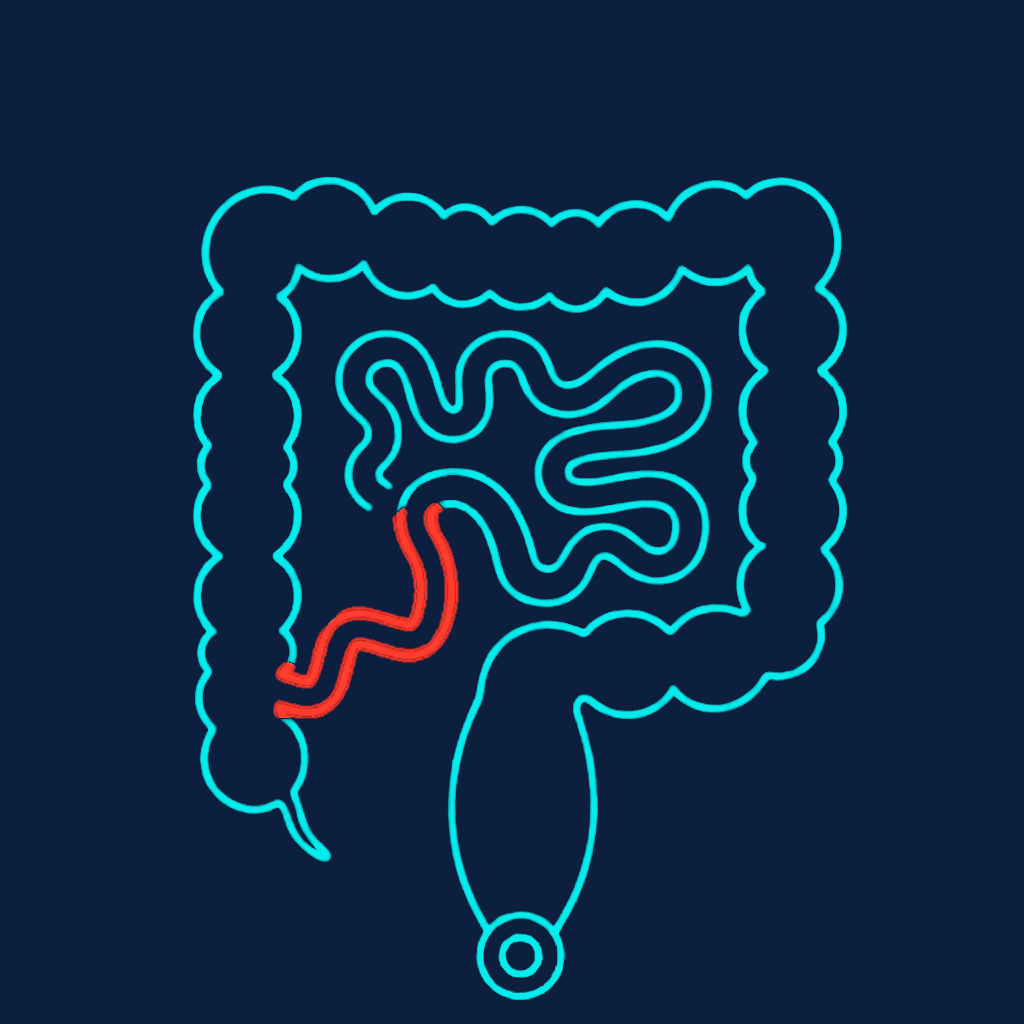
Upper-tract (duodenal) Crohn's disease generally falls under Small Bowel Crohn's. 79
Frequently asked questions
Orientation for the whole care team. Hover or tap any dotted term for a plain-language definition.
When is surgery indicated in Crohn's disease?
Surgery treats complications, and for limited disease it can replace a lifetime of medication. The classic triggers are a fibrostenotic stricture causing obstruction; penetrating disease (an abscess or fistula); disease that no longer responds to, or can't tolerate, medical therapy; dysplasia or cancer; and growth failure in children. For limited ileocecal disease, early resection is a reasonable alternative to biologics — the lesson of the LIR!C trial. The modern posture is a shared decision with gastroenterology, made earlier and on an optimized, well-nourished patient, rather than surgery as a last resort. 25,27,30,31
What are the main operations for Crohn's disease?
They map to where the disease is. Ileocolic resection is the most common. Strictureplasty widens small-bowel strictures without removing bowel. Colectomy or proctocolectomy is used for Crohn's colitis. Perianal disease is managed with seton drainage and sphincter-sparing repair (LIFT, advancement flap). Across all four regions the guiding principle is to remove as little bowel as possible, because Crohn's can recur anywhere in the gut. 8,19,34,54
How common is perianal Crohn's disease?
Perianal disease affects roughly 25% of patients with Crohn's overall. About 5% have isolated perianal Crohn's — perianal involvement with no active disease elsewhere in the gut. It follows a distinct course, can precede the intestinal diagnosis by years, and is now graded by the TOpClass classification. 42,43,44,59
How is recurrence prevented after Crohn's surgery?
Three levers: stopping smoking (the single biggest modifiable factor), risk-based biologic prophylaxis for high-risk patients, and endoscopic surveillance at 6–12 months using the Rutgeerts score to decide when to escalate — the strategy validated by the POCER trial. Anti-TNF is the most evidence-backed drug lever after surgery, and monitoring pairs endoscopy with non-invasive markers between scopes. 68,71,107,108
What is the Kono-S anastomosis?
The Kono-S is an antimesenteric, functional end-to-end reconnection designed to keep the bowel lumen wide and the mesentery away from the join. It has been associated with reduced endoscopic and surgical recurrence after ileocolic resection. Multiple meta-analyses support this benefit, though a randomized comparison found no reduction in endoscopic recurrence, so the technique remains under active study. 8,9,10,12
Is a small-bowel (intestinal) transplant ever needed for Crohn's?
Rarely. Intestinal transplantation is a last-resort therapy, not a routine Crohn's operation. It only enters the picture when repeated ileocolic resections, extensive small-bowel disease, or a penetrating phenotype leave a patient with short-bowel syndrome and intestinal failure, and long-term parenteral nutrition can no longer be sustained — from loss of venous access, recurrent line infections, or liver injury. However, Crohn's disease is the second-leading indication for intestinal transplantation in short-bowel syndrome, yet the overall number performed stays very low. 122,123
Advanced therapy & the surgical decision
Surgery and drugs are not rivals in Crohn's — they are sequential tools in one plan. 113 The surgeon does not prescribe these agents, but must know which one a patient is on, how it changes the operation, and when medical therapy has done its job and it is time to operate. This is the surgeon's-eye view of advanced medical therapy: the agents, the perioperative decisions they force, and the optimization that makes an elective operation safer.
The agents
- Anti-TNF (infliximab, adalimumab) — the long-standing cornerstone, with the strongest evidence for healing perianal fistulas. 117
- Anti-integrin — vedolizumab acts locally in the bowel, a profile often favored around the time of surgery. 109
- Anti-IL-12/23 & anti-IL-23 — ustekinumab, and the more selective anti-IL-23 agent risankizumab. 110,111
- JAK inhibitors — the oral small-molecule upadacitinib, an option once biologics have failed. 112
- S1P modulators — an emerging oral class established in ulcerative colitis and still under study in Crohn's. 118
Around the operation
- Biologics rarely delay surgery — current guidance does not mandate holding a biologic before an operation, and preoperative anti-TNF has not been shown to drive postoperative infection. 113
- Steroids are the real risk — it is safer to wean corticosteroids before an elective operation wherever the clock allows. 113
- Time the elective case — for urgent sepsis or obstruction, operate; for elective disease, optimize first. 113
- Failure is a decision point — loss of response, intolerance, or a fixed fibrotic stricture means the drug has finished its work. 113
Preoperative optimization — prehabilitation
Where the operation can wait, a short optimization window measurably lowers complications. 116 Four levers matter most.
- Nutrition — correct malnutrition and low albumin before operating; preoperative exclusive enteral nutrition lowers postoperative septic complications. 3,114
- Steroids — taper corticosteroids where feasible; combined with a biologic they raise postoperative infectious and septic complications. 115
- Smoking cessation — stopping smoking is the single highest-yield modifiable factor, reducing both perioperative complications and later recurrence. 70
- Psychological prehab — multimodal prehabilitation combining exercise, nutrition, and psychological support reduces severe postoperative complications. 116
Deep dive: when the drug's job is done — the LIR!C shift advanced
The old model treated surgery as the last resort after every drug had failed. LIR!C reframed it: for limited ileocecal disease, laparoscopic resection matched infliximab on quality of life, and at long-term follow-up about half of the surgical patients had still avoided a biologic. 31 The practical message for the team is to offer early resection as a genuine first-line option, not only a rescue.
Therapy returns after the operation. Crohn's recurs at the neoterminal ileum, so advanced therapy returns after the operation as recurrence prophylaxis in higher-risk patients. 71 See the Recurrence section for the surveillance-and-escalate plan built around the POCER trial.
Match the agent to the whole picture. Perianal fistulizing disease favors anti-TNF; a patient wary of systemic immunosuppression may prefer gut-selective vedolizumab; oral small molecules suit those who have exhausted biologics. 113 For perianal disease specifically, see pcrohns.org.
Four surgical literature collections
Crohn's surgery is organized here by where the disease strikes. Each collection gathers the surgical literature for that region — anchored to a precise MeSH topic and searchable with AI (tap a node in the home-page pyramid to open one). Because Crohn's recurs and can hit any part of the gut, the principle running through all four is to remove as little bowel as possible. 18,81
- Ileocolic resection — the most common operation, for disease at the terminal ileum and cecum; increasingly done with a Kono-S anastomosis, which is associated with lower endoscopic and surgical recurrence. 8,34
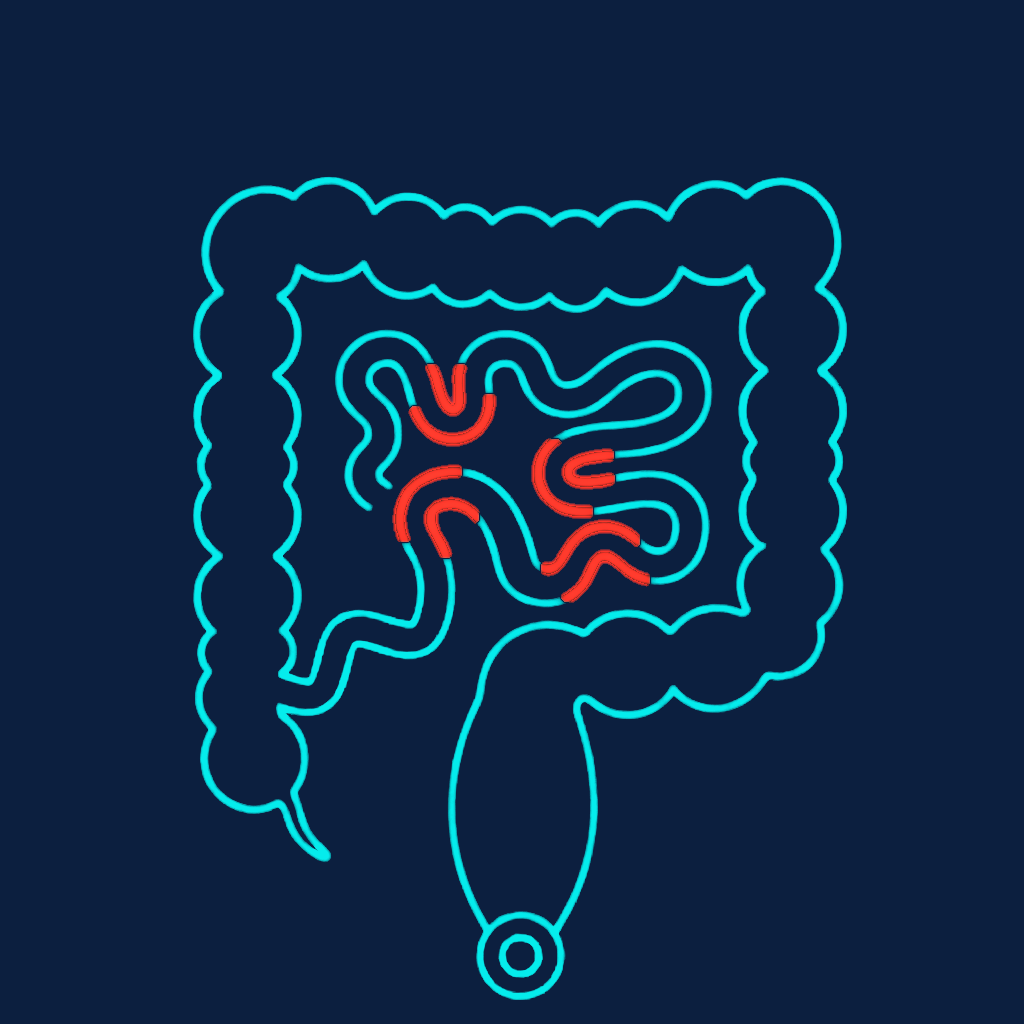
- Small Bowel Crohn's — for several narrowings, strictureplasty widens each stricture instead of resecting bowel, preserving intestinal length. 13,17
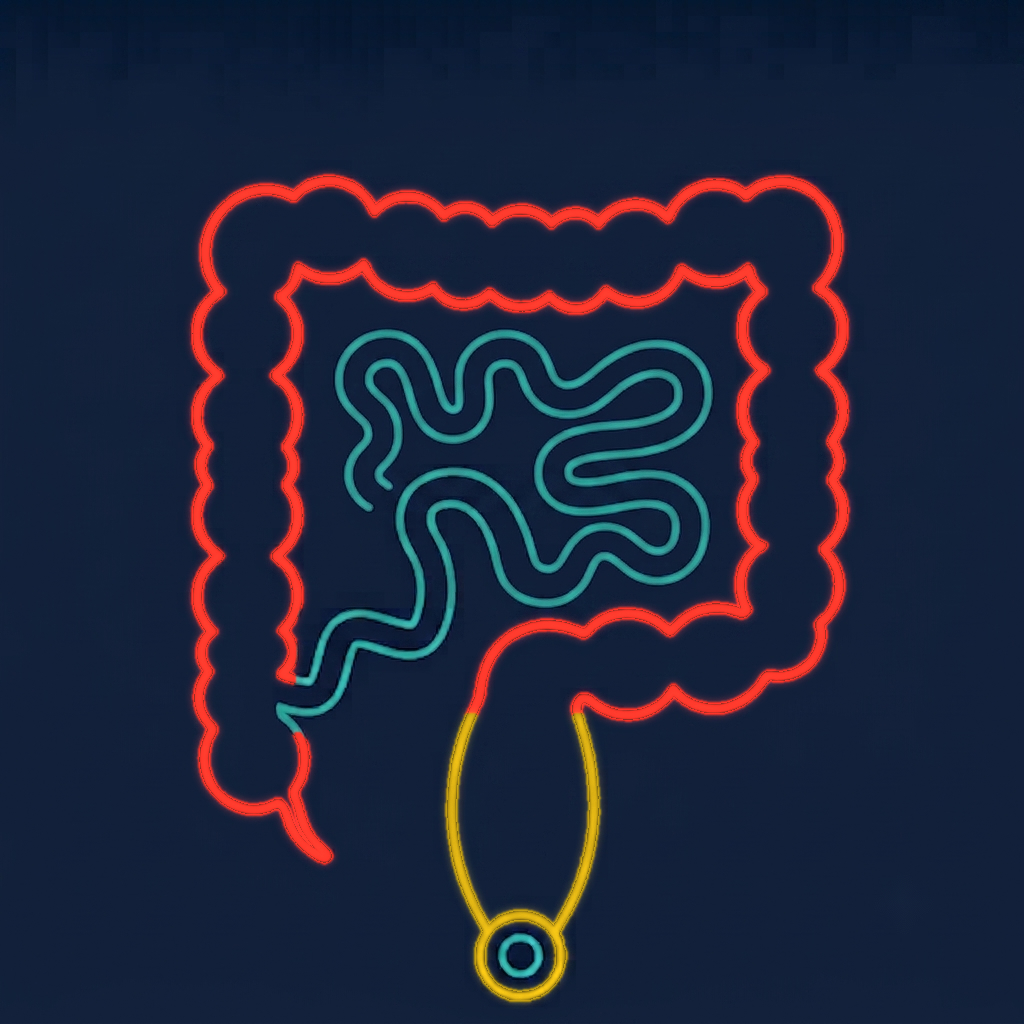
- Large Bowel Crohn's — the operation matches disease extent, from segmental colectomy to proctocolectomy, guided by rectal sparing and disease distribution. 19,22,113
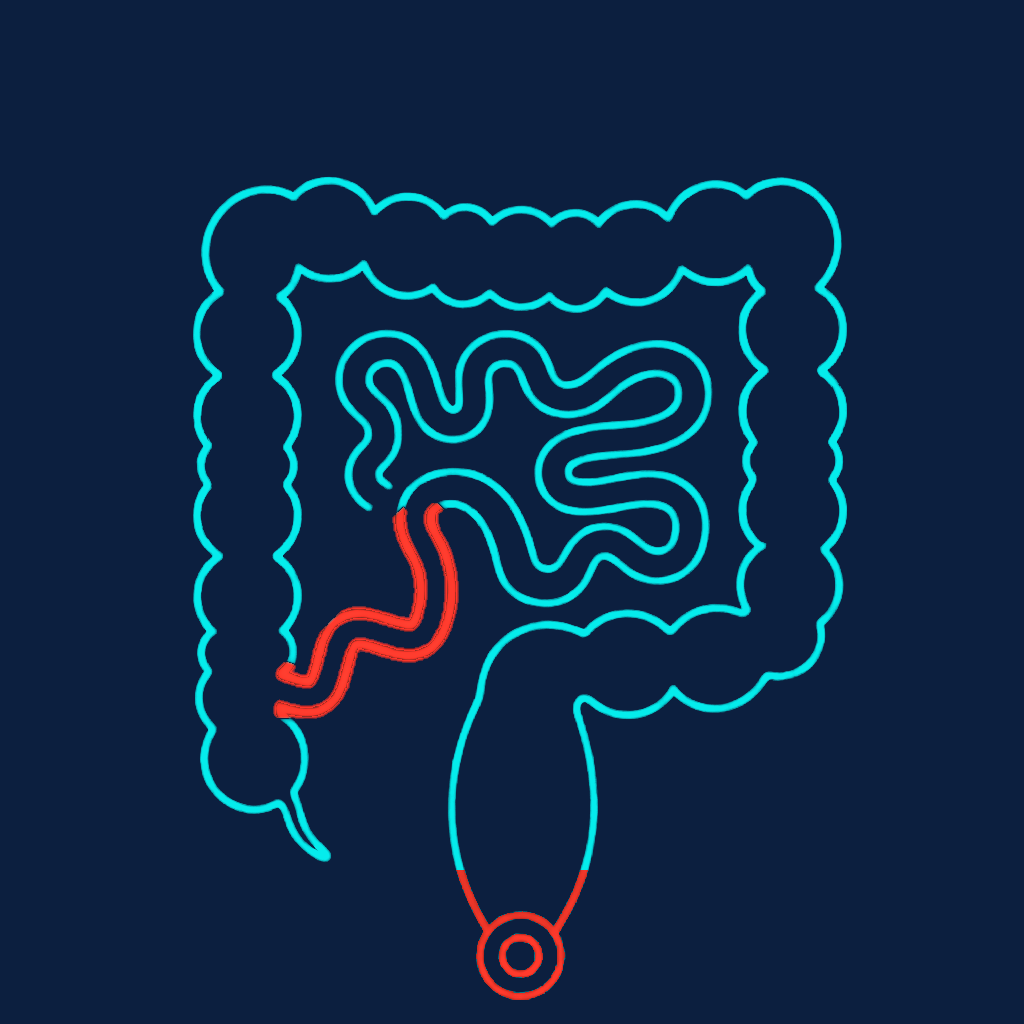
- Perianal Crohn's — drained and controlled before repair: a seton first, then sphincter-sparing repair, with local stem-cell therapy an option for complex fistulas. 47,54,61 See also pcrohns.org.
Deep dive: choosing the operation & technique advanced
Ileocolic — the anastomosis matters. The Kono-S keeps the mesentery off the suture line; the SuPREMe-CD randomized trial reported lower endoscopic (Rutgeerts) and surgical recurrence versus a conventional stapled anastomosis. 8–12 Whether to also excise more of the inflamed mesentery is still under study.
Strictureplasty — pick by length. Heineke-Mikulicz for short strictures (≲10 cm), Finney for medium (~10–20 cm), and the side-to-side isoperistaltic Michelassi for long or several contiguous strictures. Avoid strictureplasty where malignancy is suspected. 13–18
Colitis — how much colon. Segmental colectomy preserves the most bowel but carries a higher chance of disease returning in the remaining colon; more extensive resection trades that for fewer reoperations. 19–22
Access — minimally invasive by default. Where feasible, ileocolic resection is performed laparoscopically or robotically; comparative and randomized data show faster recovery and fewer adhesions without worse disease-specific outcomes than open surgery. 76–78
Duodenal disease. Upper-tract (duodenal) Crohn's is uncommon and is usually managed with strictureplasty or surgical bypass rather than resection. 79,80
Surgical indications & techniques
Medication controls inflammation, but surgery is the definitive answer to Crohn's complications — and, for limited disease, a reasonable first move. 31 The aim is always to fix the problem while sparing as much bowel as possible, because most patients will meet the disease again elsewhere (repeated resections risk short-bowel syndrome).
Indications
- Fibrostenotic stricture causing obstruction 13
- Penetrating disease — an abscess (drain it first) or a fistula 23–26
- Disease that no longer responds to, or can't tolerate, medical therapy 27–29
- Dysplasia or cancer; growth failure in children 84,86
- Limited ileocecal disease — early resection as an alternative to biologics LIR!C
Techniques
- Ileocecal / ileocolic resection — the most common operation; minimally invasive when feasible 34–36
- Strictureplasty — bowel-sparing for multifocal small-bowel strictures 13,18
- Kono-S anastomosis — antimesenteric, functional end-to-end; associated with reduced endoscopic/surgical recurrence 8,9
- Mesenteric considerations — removing more of the inflamed mesentery (the fatty tissue anchoring the bowel) is an area of active investigation 37–41
Deep dive: early surgery vs biologics — the LIR!C question advanced
For limited ileocecal disease, resection is no longer a last resort. The LIR!C randomized trial found laparoscopic ileocecal resection comparable to infliximab on quality of life; at long-term follow-up roughly half the surgical patients had still avoided a biologic, with no excess re-interventions. 30–33 The practical shift: offer early resection as a genuine first-line option, not only after drugs fail.
Why bowel-sparing governs. Because Crohn's recurs and can strike any segment, repeated or extensive small-bowel resection risks short-bowel syndrome and intestinal failure — the rationale behind strictureplasty and limited resection. 81–83
Dysplasia and cancer. Colorectal dysplasia or cancer complicating Crohn's colitis is a firm indication for colectomy, with the extent of resection guided by lesion multifocality and surveillance findings. 25,84,85
Children. In pediatric Crohn's, growth failure and pubertal delay refractory to medical therapy are accepted surgical indications. 86,87
Perianal Crohn's disease
Perianal disease affects roughly 25% of Crohn's patients, and about 5% have isolated perianal Crohn's — fistulas and abscesses with no active disease elsewhere. 42–44 It behaves like its own condition and is handled in a deliberate sequence: drain, control, then repair.
- Map before you treat — pelvic MRI ± examination under anesthesia to chart every fistula tract and drain any hidden abscess. Operating on undrained sepsis makes things worse. 45,46
- Combined therapy — a seton to keep the tract draining, plus a biologic (anti-TNF is the cornerstone); treat any coexisting proctitis, which otherwise stalls healing. 88–91
- Definitive repair — sphincter-sparing (LIFT, advancement flap) once sepsis is controlled; stem-cell therapy for selected complex fistulas. 47–49
- Refractory disease — fecal diversion or proctectomy in selected cases. 50–53
Dedicated perianal reference
For a focused companion on perianal Crohn's — fistulas, abscesses, setons, and sphincter-sparing repair, with its own searchable literature — see pcrohns.org.
Deep dive: classifying fistulas & why combined therapy advanced
Perianal fistulas are graded simple vs complex — high tracts, multiple openings, or accompanying proctitis or stricture. 58–60 Pelvic MRI plus EUA is the reference workup. Combined medical-surgical therapy — a seton plus an anti-TNF — heals more fistulas than either alone. 54–57 For complex fistulas that fail standard care, local mesenchymal stem-cell therapy (darvadstrocel, from the ADMIRE-CD trial) is an option. 61–64
When anti-TNF is not enough. Ustekinumab and vedolizumab are increasingly used for perianal fistulizing disease when anti-TNF fails or is not tolerated. 92,93
Isolated perianal disease. When perianal Crohn's occurs without luminal activity, it follows a distinct course now captured by the TOpClass classification. 59,94
Cancer risk in chronic fistulas. Long-standing perianal fistulas carry a small but real risk of fistula-associated anorectal cancer, so chronically active tracts warrant surveillance. 95,96
Postoperative recurrence prevention
Without prevention, Crohn's comes back after surgery — endoscopically in most patients within a year, at the neoterminal ileum just above the new join. 65–67 A structured, risk-based plan bends that curve.
- Smoking cessation — the single most powerful modifiable factor; continuing to smoke markedly worsens recurrence, so stopping is the highest-yield thing a patient can do. 68–70
- Risk-based prophylaxis — start a biologic early in high-risk patients (smokers, penetrating disease, prior resection), where early prophylaxis reduces endoscopic recurrence. 71,107,119
- Endoscopic surveillance — ileocolonoscopy at 6–12 months, grading the Rutgeerts score at the POCER-recommended interval to decide whether to escalate. 71,108,120,121
- Treat-to-target post-op — escalate therapy on endoscopic recurrence even when the patient feels well, which prevents symptomatic relapse. 71,72
Deep dive: reading the Rutgeerts score & POCER advanced
The Rutgeerts score runs i0–i4: i0–i1 is near-remission, i2 is intermediate, and i3–i4 signal progressive recurrence that reliably precedes symptoms. The POCER trial showed that acting on this — colonoscopy at 6 months and stepping up therapy for endoscopic recurrence — beat drug therapy chosen up front. 71–73 Smoking and prior resection are the risk factors that most justify starting a biologic early.
Prophylaxis works. Early anti-TNF prophylaxis reduces postoperative endoscopic recurrence in high-risk patients, and is the most evidence-backed pharmacologic lever after surgery. 97–99
Predicting recurrence. Beyond smoking and prior resection, histologic myenteric plexitis at the resection margin predicts early endoscopic and clinical recurrence. 100–102
Non-invasive monitoring. Fecal calprotectin is a useful non-invasive marker to track for recurrence between surveillance endoscopies. 103,104
Sepsis begets recurrence. Postoperative intra-abdominal septic complications are themselves associated with earlier and increased recurrence — a further reason to drain sepsis before operating. 105,106
Intended for healthcare professionals. Patients and families: see the plain-language Crohn's resources on pCrohns.
For clinicians & traineesWhen & why we operate in Crohn's disease
Unlike ulcerative colitis, surgery does not cure Crohn's disease — yet most patients still need an operation at some point. The role of surgery is to treat the complications of the disease (obstruction, fistula, abscess, perforation, bleeding, and neoplasia) and disease that no longer responds to medical therapy. This page focuses on when and why we operate; technique (the “how”) is touched on only briefly. Grades of recommendation are from the American Society of Colon and Rectal Surgeons (ASCRS) Clinical Practice Guideline for the Surgical Management of Crohn's Disease1.
An independent educational project of Holubar Lab. The views expressed are the author's own and are not those of Cleveland Clinic or the American Society of Colon and Rectal Surgeons.
Refractory Crohn's proctocolitis → proctocolectomy with end ileostomy. A restorative ileal pouch (IPAA) is not generally recommended in Crohn's disease. Perianal Crohn's is a separate pathway.
1 Why we operate — the indications
Surgery in Crohn's is not curative; it is reserved for complications of the disease and for disease that fails medical therapy. Population studies show roughly a quarter to two-thirds of patients undergo surgery within a few years of diagnosis.1
| Indication | What it looks like | ASCRS grade | Operation typically favored |
|---|---|---|---|
| Failed or intolerable medical therapy | Inadequate response, drug side-effects, or steroid dependence despite optimized therapy | 1C | Resection of the affected segment; for limited ileocecal disease, consider early resection (see Table 2).1, 2 |
| Fibrostenotic stricture → obstruction | Cramping, distension, post-prandial pain, or recurrent obstruction from a fixed narrowing | 1C | Endoscopic dilation, resection, or strictureplasty depending on length and location.1, 3 |
| Penetrating disease | Internal or enterocutaneous fistula with persistent sepsis; or a free perforation | 1B–1C | Resect the diseased bowel (secondarily involved organs are often preserved); urgent surgery for free perforation.1, 4 |
| Intra-abdominal abscess | Phlegmon or walled-off collection, usually from a contained perforation | 2B | Antibiotics ± percutaneous drainage first; resection when drainage fails or to treat the underlying diseased bowel.1, 5 |
| Significant hemorrhage | Uncontrolled, hemodynamically significant, or recurrent GI bleeding | 1C | Operative exploration after endoscopic/radiologic attempts at control.1, 6 |
| Neoplasia | High-grade or multifocal low-grade dysplasia, a dysplastic mass, cancer — or a colonic stricture that cannot be surveyed | 1B | Oncologic resection; total proctocolectomy is often favored given the field risk in Crohn's colitis.1, 7, 8 |
| Growth failure (children) | Prepubertal growth retardation from active disease despite medical therapy | 1B | Resection of localized disease to allow catch-up growth.1, 9 |
2 When to operate — vs. keep treating
Timing is individualized. In several scenarios a planned, optimized operation beats prolonged medical escalation; in others, medical or endoscopic therapy is tried first.
| Scenario | Try medical / endoscopic first? | When to operate |
|---|---|---|
| Limited ileocecal Crohn's failing conventional therapy | Rather than automatically escalating to a biologic, early laparoscopic ileocecal resection is an evidence-based alternative | Offer resection as a first-line option — the LIR!C trial showed comparable quality of life and durable outcomes vs. infliximab.1, 10, 11 |
| Short, endoscopically accessible fibrotic stricture | Endoscopic balloon dilation can relieve obstruction and defer surgery | Operate when dilation fails or isn't feasible, or the stricture is long, multiple, or associated with penetrating disease.1, 3 |
| Intra-abdominal abscess | Antibiotics + percutaneous drainage to control sepsis and optimize the patient | Convert an emergency into an elective, single-stage resection; operate promptly if drainage fails.1, 5 |
| Acute severe Crohn's colitis or free perforation | No — do not delay definitive care | Emergency total abdominal colectomy with end ileostomy; urgent resection for free perforation.1, 4 |
| Colonic stricture that cannot be surveyed endoscopically | No — ongoing surveillance is unreliable through an impassable stricture | Resect, because such strictures can harbor occult cancer.1, 8 |
3 How we operate (briefly — technique is individualized)
The operation is chosen and configured at the discretion of the treating surgeon, based on disease pattern, prior surgery, and bowel length.
| Situation | Typical approach | Note |
|---|---|---|
| Localized ileocolic / segmental disease | Ileocolic resection — the most common Crohn's operation | A limited, macroscopically disease-free margin is adequate; wide margins do not reduce recurrence.1, 12 |
| Diffuse small-bowel strictures / short-bowel risk | Strictureplasty to preserve bowel length | Recurrence and complication rates are comparable to resection; the durable bowel-sparing option in diffuse jejunoileal disease.1, 13, 14, 15 |
| The anastomosis | Configured as the surgeon judges best (end-to-end, side-to-side, end-to-side) | Kono-S and mesenteric-targeted approaches may reduce post-operative recurrence (under active study).1, 12, 16 |
| Surgical access | Laparoscopic or robotic where expertise is available | Faster recovery and equivalent long-term outcomes vs. open.1, 17 |
| Refractory Crohn's proctocolitis | Proctocolectomy with a permanent end ileostomy | A restorative ileal pouch (IPAA) is not generally recommended in known Crohn's, given high rates of pouch complications and failure.1, 18 |
| Perianal Crohn's | Setons, drainage, and sphincter-sparing repair — a distinct pathway | Covered separately on the Perianal page. |
4 Brief contrast — ulcerative colitis
The logic differs in UC, where surgery is curative. (The UC surgery pathways are covered in depth on the dedicated UC pages.)
| Question | Crohn's disease | Ulcerative colitis |
|---|---|---|
| Is surgery curative? | No — treats complications; disease can recur elsewhere | Yes — removing the colon and rectum cures the colitis.19 |
| Why operate? | Complications (obstruction, fistula, abscess, perforation, bleeding) + medically-refractory disease | Medically-refractory disease or neoplasia.19 |
| How? | Segmental/ileocolic resection, strictureplasty; proctocolectomy + end ileostomy for refractory colitis | Staged restorative proctocolectomy with a J-pouch (1/2/3 stages), or a permanent or continent ileostomy.19, 20 |
| Neoplasia / dysplasia | HGD, multifocal LGD, DALM, or cancer → resection / total proctocolectomy | A discrete visible lesion may be excised endoscopically, but because colitis dysplasia reflects a field change, the standard is total proctocolectomy with a J-pouch or end ileostomy.19, 21, 22 |
Grades of recommendation (ASCRS/GRADE): the first digit is strength (1 strong, 2 weak); the letter is evidence quality (A high, B moderate, C low). A weak recommendation means the best action may reasonably differ between patients.1
References
Every reference below was retrieved from the peer-reviewed literature and verified against PubMed; each links to its record. Author lists are abbreviated pending final formatting.
- Strong S, et al. Clinical Practice Guideline for the Surgical Management of Crohn's Disease. Dis Colon Rectum. 2015;58:1021-36. PMID 26445174
- Gerdin L, et al. The Swedish Crohn Trial: A Prematurely Terminated Randomized Controlled Trial of Thiopurines or Open Surgery for Primary Treatment of Ileocaecal Crohn's Disease. J Crohns Colitis. 2016;10:50-4. PMID 26507858
- Lowenfeld L, et al. Managing Stricturing Crohn's Disease: Resect? Strictureplasty? Dilate?. J Laparoendosc Adv Surg Tech A. 2021;31:881-889. PMID 34265212
- Sampietro GM, et al. Perforating Crohn's disease: conservative and surgical treatment. Dig Dis. 2013;31:218-21. PMID 24030229
- Celentano V, et al. High complication rate in Crohn's disease surgery following percutaneous drainage of intra-abdominal abscess: a multicentre study. Int J Colorectal Dis. 2022;37:1421-1428. PMID 35599268
- Robert JR, et al. Severe gastrointestinal hemorrhage in Crohn's disease. Ann Surg. 1991;213:207-11. PMID 1998401
- Kiran RP, et al. Dysplasia associated with Crohn's colitis: segmental colectomy or more extended resection?. Ann Surg. 2012;256:221-6. PMID 22791098
- Fumery M, et al. Colonic Strictures in Inflammatory Bowel Disease: Epidemiology, Complications, and Management. J Crohns Colitis. 2021;15:1766-1773. PMID 33844013
- Pacilli M, et al. Surgery in children with Crohn disease refractory to medical therapy. J Pediatr Gastroenterol Nutr. 2011;52:286-90. PMID 20975579
- Ponsioen CY, et al. Laparoscopic ileocaecal resection versus infliximab for terminal ileitis in Crohn's disease: a randomised controlled, open-label, multicentre trial. Lancet Gastroenterol Hepatol. 2017;2:785-792. PMID 28838644
- Stevens TW, et al. Laparoscopic ileocaecal resection versus infliximab for terminal ileitis in Crohn's disease: retrospective long-term follow-up of the LIR!C trial. Lancet Gastroenterol Hepatol. 2020;5:900-907. PMID 32619413
- Click B, et al. Ileocolic Resection for Crohn Disease: The Influence of Different Surgical Techniques on Perioperative Outcomes, Recurrence Rates, and Endoscopic Surveillance. Inflamm Bowel Dis. 2022;28:289-298. PMID 33988234
- Fazio VW, et al. Strictureplasty in diffuse Crohn's jejunoileitis. Dis Colon Rectum. 1985;28:512-8. PMID 4017813
- Dietz DW, et al. Strictureplasty in diffuse Crohn's jejunoileitis: safe and durable. Dis Colon Rectum. 2002;45:764-70. PMID 12072628
- Holubar SD, et al. Bowel-preserving surgery for stricturing jejunoileal Crohn's disease, part 2: step-by-step Finney strictureplasty - a video vignette. Colorectal Dis. 2024;26:586-587. PMID 38282139
- Selvakumar D, et al. Mesenteric excision and Kono-S anastomosis trial (MEErKAT): A study protocol for a multicentre, 2 × 2 factorial, randomised controlled, open-label superiority trial. Colorectal Dis. 2025;27:e70212. PMID 40922120
- Eshuis EJ, et al. Long-term outcomes following laparoscopically assisted versus open ileocolic resection for Crohn's disease. Br J Surg. 2010;97:563-8. PMID 20175126
- Reese GE, et al. The effect of Crohn's disease on outcomes after restorative proctocolectomy. Dis Colon Rectum. 2007;50:239-50. PMID 17180251
- Holubar SD, et al. The American Society of Colon and Rectal Surgeons Clinical Practice Guidelines for the Surgical Management of Ulcerative Colitis. Dis Colon Rectum. 2021;64:783-804. PMID 33853087
- Grieco MJ, et al. Surgical Management of Ulcerative Colitis. Gastroenterol Clin North Am. 2020;49:753-768. PMID 33121694
- Alon G, et al. Ulcerative Colitis-Associated Neoplasia. Dis Colon Rectum. 2026;69:1682-1686. PMID 41960735
- Manta R, et al. Endoscopic Submucosal Dissection for Visible Dysplasia Treatment in Ulcerative Colitis Patients: Cases Series and Systematic Review of Literature. J Crohns Colitis. 2021;15:165-168. PMID 32710744
About crohnsology.org
Crohnsology is an evidence-based clinician-and-trainee reference for the surgical management of Crohn's disease — ileocolic resection, strictureplasty, colectomy, and perianal disease. It exists to collapse the long distance between publication and practice: evidence takes, on average, roughly 17 years to reach routine clinical care, and Crohnsology narrows that gap by pairing the newest Crohn's-surgery literature with a “deep and narrow” AI you can query in plain language. Written for the whole care team — students, PAs, RNs, and residents through fellows and early-career staff — it is an orientation to why and how we operate on Crohn's, grounded in the peer-reviewed evidence. It is one of the paired provider and patient sites in the IBDology family.

This site was created by Stefan D. Holubar, MD, MS, FACS, FASCRS, Professor of Surgery at Cleveland Clinic and the Cleveland Clinic Lerner College of Medicine & Case Western Reserve University. A fellowship-trained colorectal surgeon who specializes in inflammatory bowel disease—and, living with IBD and a J-pouch himself, a patient too—he brings both perspectives to this work. He is co-PI of the Crohn's & Colitis Foundation IBD-SIRCQ and the ACS-NSQIP IBD Collaborative, founder of the iPouch Consortium, and has authored over 300 peer-reviewed publications.
Dr. Holubar is an employee of Cleveland Clinic, and has the following disclosures: research funding from the American Society of Colon & Rectal Surgeons and the Crohn's & Colitis Foundation, and has no other disclosures or conflicts of interest.